

The Soul of a 1957 Original: A Journey into the House of Rain
I have always been a romantic when it comes to old structures, not out of mere nostalgia, but because of the inherent craftsmanship and thought that went into buildings of a bygone era. When I first discovered the story of Chih Wen, the founder of Hyphen Architects, and his 1950s garden home in Singapore, I was immediately struck by his decision to remodel rather than rebuild. In a city where old bungalows are frequently leveled to make way for glass-and-steel boxes, Chih Wen chose to preserve the good bones of a 1957 single-story house. This project, often referred to as the House of Rain, is a profound meditation on what it means to live in the tropics. By stripping away the layers of a typical modern renovation, he revealed the original timber rafters and ventilation blocks, creating a space that breathes with the city's rhythms.
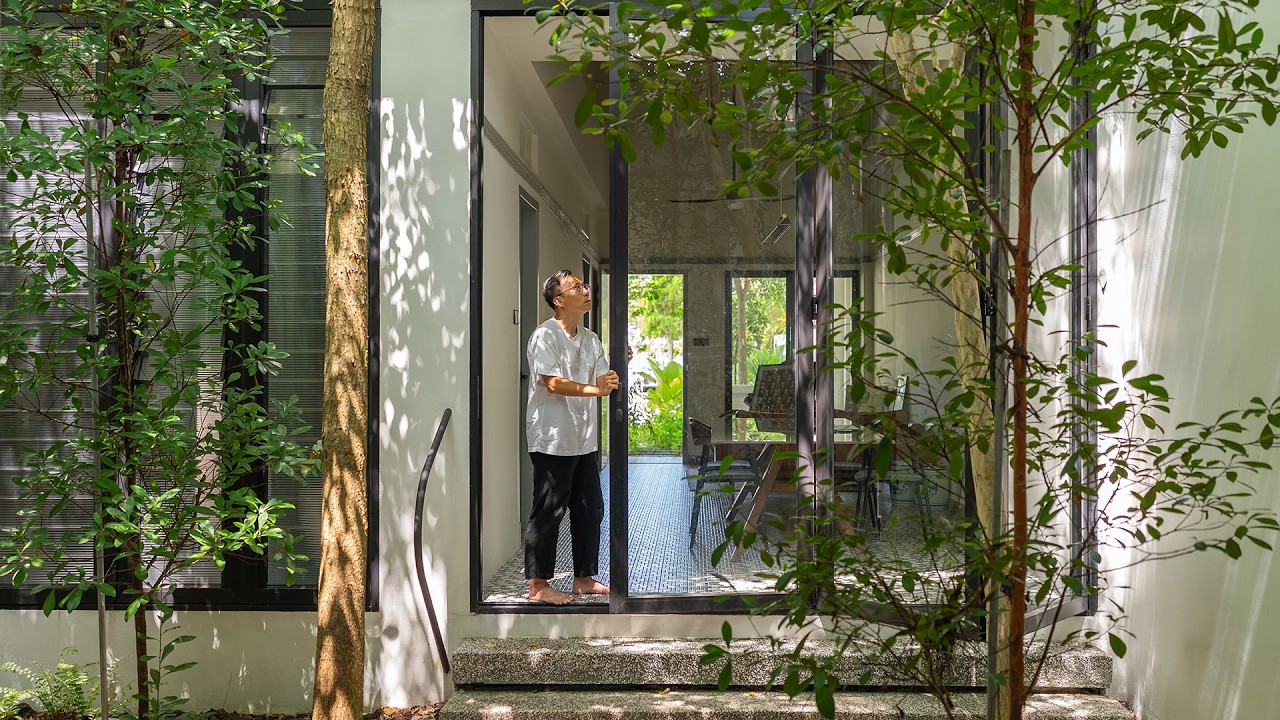
Inspiration from Tadao Ando: Embracing the Elements
The design philosophy of this home is deeply rooted in the works of Japanese masters, particularly Tadao Ando and Ryue Nishizawa. I found it fascinating how Chih Wen referenced Ando's famous Azuma House, a structure known for its central open courtyard that forces residents to interact with the elements. There is a famous anecdote where the owner of the Azuma House complained about the cold, only for Ando to suggest they put on a sweater. This ethos is mirrored in Chih Wen’s home: instead of fighting the Singaporean heat and rain with heavy air conditioning and sealed glass, the house invites the climate in. It is an architecture that asks us to leverage our physical power and learn to love the tropical environment again, accepting that a bit of rain or wind is not an inconvenience, but a part of life.

A Masterclass in Materiality and Preservation
During the tour, I noticed how the renovation highlights the beauty of raw materials. Once the old ceiling was removed, the original timber rafters were exposed, adding a warmth that balances the coolness of the concrete. Chih Wen also kept the original mosaic floor tiles, which provide a tactile link to the house’s mid-century history. The use of ventilation blocks is another stroke of genius, as they allow for a constant flow of air while creating a beautiful play of light and shadow across the floors. The home is positioned between two cul-de-sacs, meaning it benefits from uninterrupted monsoon winds that sweep through the living spaces. This natural ventilation keeps the home cool without the need for constant mechanical cooling, proving that sensitive design can solve modern environmental challenges.
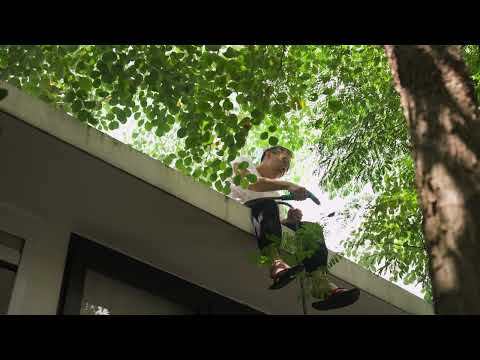
Dissolving Boundaries: The Garden as a Living Room
One of the most radical changes Chih Wen made was the removal of traditional boundary walls. In Singapore, it is common to have a gate and a tall wall that isolates the house from the street. Instead, this home has no clear separation between the inside and the outside. The garden flows directly into the living area, softening the edges of the concrete structure. At the back of the house, a fully openable aluminum louver wall looks out onto the back alley. When friends and family gather, these louvers are opened wide, instantly expanding the footprint of the home and connecting the interior to the neighborhood. It is a social and spatial experiment that challenges our ideas of privacy and luxury, suggesting that true wealth lies in a connection to one's surroundings.

Conclusion: Learning to Love the Tropical Rain
Watching the rain fall into the open spaces of this home is a transformative experience. It serves as a reminder that architecture should not be a barrier to nature but a bridge. Chih Wen’s home is more than just a beautiful residence: it is a manifesto for sustainable, climate-responsive living in Southeast Asia. By choosing to live with the sun, the wind, and the rain, he has created a sanctuary that feels both ancient and incredibly modern. As I reflect on this tour, I am reminded that the best homes are those that don't just provide shelter, but those that teach us how to live more mindfully within our environment. It is a stunning example of how a 1950s relic can be reborn as a masterpiece of contemporary tropical design.
Curious to know more?
Watch the full original video below:
Video won't play? Watch directly on YouTube.